

Applications

GNSS Jammer Detection

The illegal use of GNSS (Global Navigation Satellite System) jammers in trucks and cars poses a serious threat to public safety and critical infrastructure. These devices block GPS signals to conceal a vehicle’s location, often to bypass fleet tracking systems or evade toll charges.

A truck on a highway passing under an overhead gantry

Highlights

  • Global satellite navigation signal analysis and jamming signal capture
  • Detects GPS, GLONASS, BeiDou and Galileo
  • AI algorithms such as jamming and interference analysis
  • Remote installation and control over Ethernet or LTE modem
  • Wide RF signal coverage from 9 kHz to 9 GHz (using the Y9860A)
  • Remote operation of Anritsu MS2090A or MS27201A spectrum analyzers
  • Permanent capture and storage, plus export in open data formats

However, jamming interferes with navigation, emergency services and aviation systems, endangering lives and disrupting legitimate operations. Most countries strictly prohibit the sale, possession and use of GNSS jammers, with heavy fines and criminal charges for violations. Their use undermines trust in transportation systems and can have severe legal and technical consequences.

The cognitelligent systems from YOTASYS detect illegal GNSS jamming devices with artificial intelligence (AI) algorithms. The monitored radio spectrum covers all GNSS bands (or higher frequencies) and includes the classic communication bands of 4G and 5G mobile networks and wireless networks, plus special frequency allocations such as satellite networks (LEOS) and the Internet of Things (IoT).

The Y9860A AI-enabled Real-Time Spectrum Analyzer (RTSA)
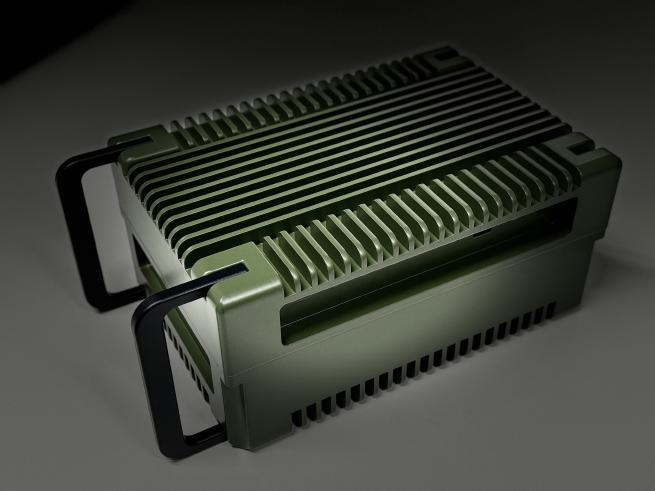
The Y9860A, an olive-green finned enclosure with two carrying handles

The Y9860A is high-performance, state-of-the-art hardware for AI algorithm processing and deep-learning inference, developed to work with a modern spectrum analyzer board, the Anritsu MS27200A, over a high-performance link. Its embedded graphics processing unit (CPU/GPU) runs real-time neural-network signal processing (CNN) algorithms in software, with room for additional, specialized signal analysis development.

The GPU is one of the most widely used processor types for machine learning, so the Y9860A significantly reduces the effort for developers to create autonomous signal identification, modulation recognition, interference mitigation and many other machine-learning applications for RF technologies. It analyzes an RF signal source and can also generate IQ data files and reports. Thanks to the AI capabilities of the integrated software, RF signals can be inspected in a sophisticated, modern way.

In one single box, the Y9860A includes numerous functions, such as interference recognition, and open-source APIs. The system comes with complete software packages and is based on the Linux Ubuntu operating system, with drivers, FPGA firmware and everything required for professional operation. It is the base for customer-specific software development.

The YOTASYS Y9860A is an innovative, modern solution for a high-performance portable setup to capture, analyze and report RF signals. Based on the IQ streaming of the MS27200A, it extends RF measurement and investigation up to 9 GHz (or higher), with unique features for detecting and analyzing unknown or unwanted signals.
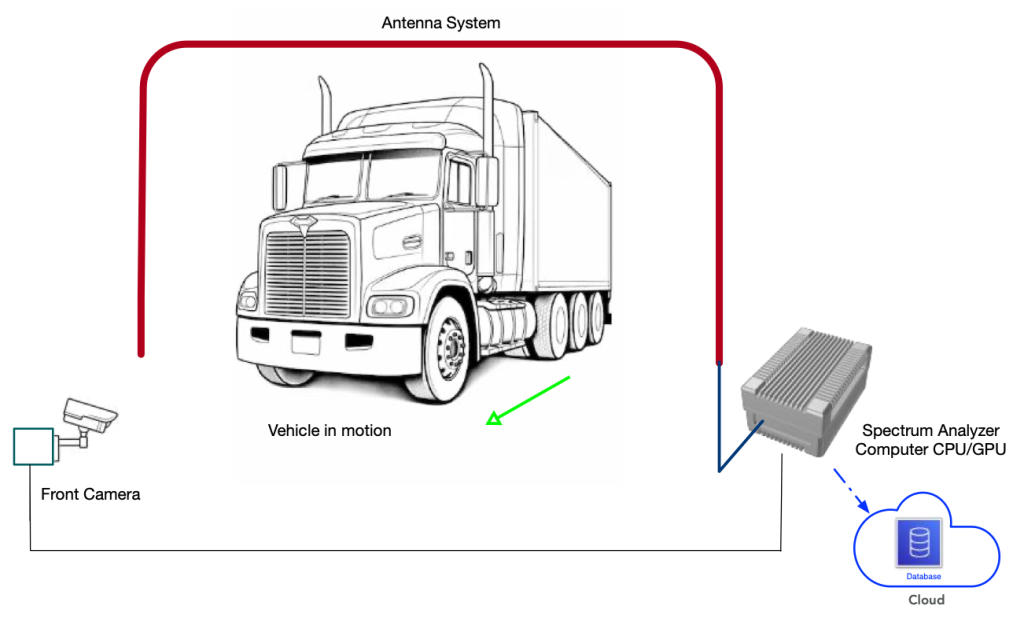
Roadside setup: an antenna system spans the road above a passing truck, a front camera and the Y9860A spectrum analyzer with its CPU/GPU are linked, and the Y9860A sends its results to a cloud database

A single Y9860A sensor can cover a complete road area and monitor it for suspicious GNSS jamming activity.

Easy graphical user interface

The Y9860A software is flexible and modular, and can be tailored to customer-specific needs. YOTASYS also develops customer-specific software and tools for fast prototyping and installation.

A web interface lets the end user operate and configure the Y9860A, with a comprehensive, application-specific dashboard of charts, buttons, status LEDs and map information.
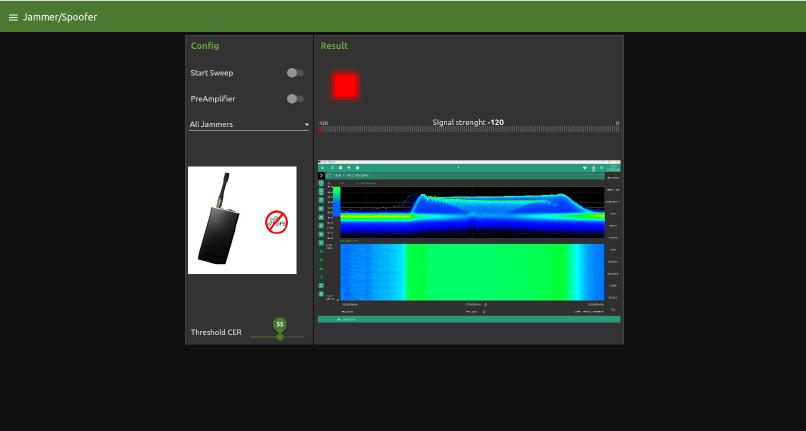
Jammer/Spoofer dashboard: sweep and preamplifier settings, a jammer type, an alarm indicator, the signal strength and a live spectrum with waterfall

The Y9860A integrates easily into existing monitoring solutions. Alarms can be tailored to specific interfaces such as HTTP, MQTT or SNMP.

In addition to radio signal analysis, YOTASYS has developed the recognition of Swiss and European vehicle registration plates (LPR), as well as other text information such as container numbers or identification marks.
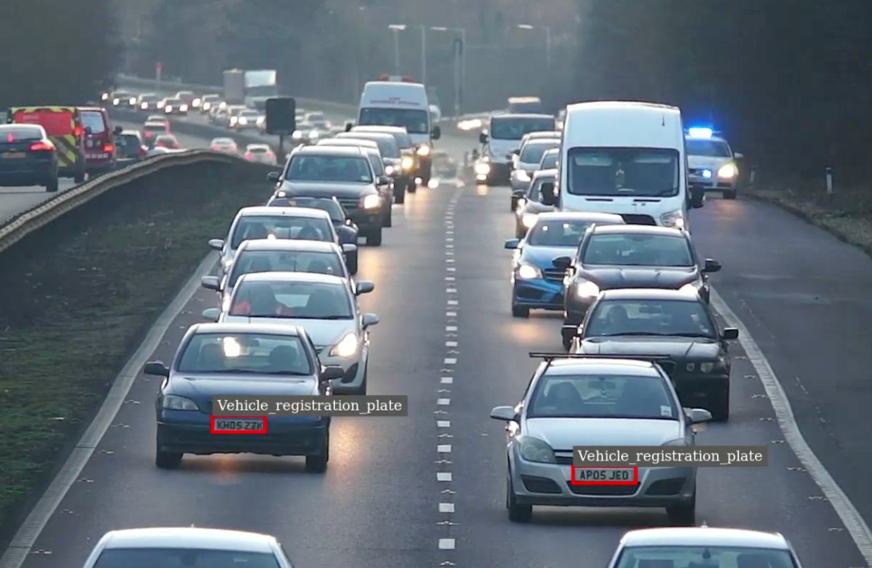
Motorway traffic with two vehicle registration plates detected and framed by the recognition software

Specifications

RF specifications based on the Y9860A. They depend on the setup and configuration of the Anritsu MS27200A.

Download the application note
Parameter Value
Frequency range 9 kHz up to 54 GHz RX lower and upper frequency limit (see datasheet)
Real-time / IQ bandwidth 2–150 MHz
Antennas 1 RX antenna on the front connector: N(f) below 20 GHz, K(f) below 43.5 GHz, V(f) below 54 GHz
Sampling rate 200 MSpS ADC/DAC sample rate at 32-bit resolution
Signal bandwidth 0.036–150 MHz
Bit resolution 8, 10, 16 or 32 bit
Trigger source Free run, external 1/2, video
Capture memory 2 GB Internal, in the MS27200A
GNSS antenna 1 RX antenna on the front SMA(f) connector

Applications and use cases

  • Monitoring and classification of live GNSS jamming signals using AI algorithms
  • Detection of signal anomalies or unwanted emissions
  • Deployment as a fixed installation or tactical portable unit
  • Spectrum occupancy measurement techniques (ITU-R SM.2154)

Other applications

All applications
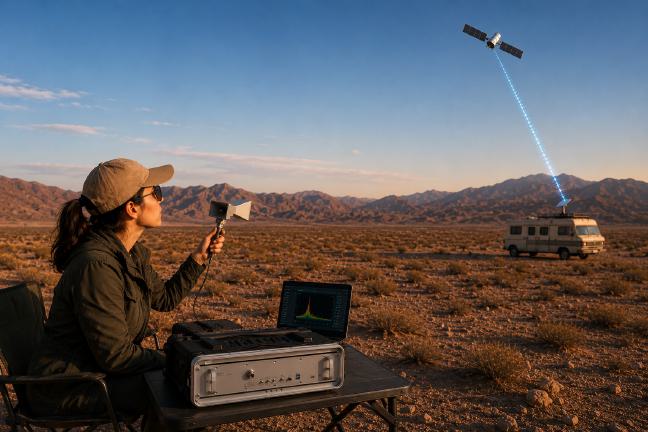
  • An operator in the desert aims a handheld horn antenna at a campervan whose Starlink uplink beam reaches a satellite, with the Y9827A and a laptop on a table

    Starlink Uplink Detection

    Passive detection, classification and geolocation of Starlink user terminals from their Ku-band uplink, with a compact horn antenna and no cooperation from the network.

    • Y9827A
    Read more
  • Two operators in high-visibility vests at a border fence, monitoring the RF spectrum on laptops and field analyzers while a drone flies overhead

    Cognitive Area and Border Control

    Detect, classify and geolocate RF emitters along borders and around secured areas, around the clock and without constant human supervision.

    • Y9827A
    Read more
  • A soldier at a desert field station with RF analysis screens and antennas, a reconnaissance drone flying overhead

    Electronic Warfare (EW) and SIGINT

    AI turns the contested electromagnetic spectrum into actionable intelligence at machine speed, from modulation recognition to drone and jammer detection.

    Read more