
These devices allow prisoners to bypass official monitoring systems, enabling them to coordinate criminal activity both inside and outside prison walls. Smuggled phones are often used to intimidate witnesses, run drug operations or maintain control over gangs.
Despite frequent searches and advanced detection technologies, the trade in illegal devices persists, often facilitated by corrupt staff or drone deliveries. This ongoing issue poses a serious challenge to prison security and public safety, prompting authorities to implement stricter measures, including signal jammers and advanced surveillance.
The cognitelligent systems from YOTASYS detect illegal communication devices with artificial intelligence (AI) algorithms. The monitored radio spectrum covers 10 kHz to 9 GHz (or higher frequencies) and includes the classic communication bands of 4G and 5G mobile networks and wireless networks, plus special frequency allocations such as satellite networks (LEOS) and the Internet of Things (IoT).
One special function is the detection of drones, which are typically equipped with wireless modems to reach the inmates. Both the drone’s typical signal and the communication channel it provides are detected.
The Y9860A AI-enabled Real-Time Spectrum Analyzer (RTSA)
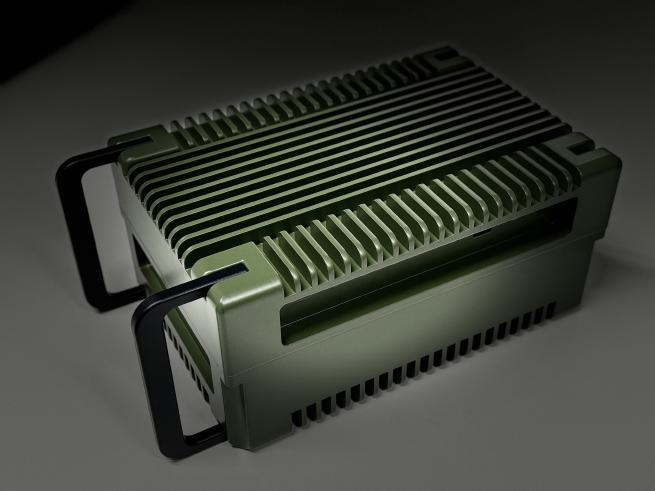
The Y9860A is high-performance, state-of-the-art hardware for AI algorithm processing and deep-learning inference, developed to work with a modern spectrum analyzer board, the Anritsu MS27200A, over a high-performance link. Its embedded graphics processing unit (CPU/GPU) runs real-time neural-network signal processing (CNN) algorithms in software, with room for additional, specialized signal analysis development.
The GPU is one of the most widely used processor types for machine learning, so the Y9860A significantly reduces the effort for developers to create autonomous signal identification, modulation recognition, interference mitigation and many other machine-learning applications for RF technologies. It analyzes an RF signal source and can also generate IQ data files and reports. Thanks to the AI capabilities of the integrated software, RF signals can be inspected in a sophisticated, modern way.
In one single box, the Y9860A includes numerous functions, such as modulation recognition, and open-source APIs. The system comes with complete software packages and is based on the Linux Ubuntu operating system, with drivers, FPGA firmware and everything required for professional operation. It is the base for customer-specific software development.
The YOTASYS Y9860A is an innovative, modern solution for a high-performance portable setup to capture, analyze and report RF signals. Based on the IQ streaming of the MS27200A, it extends RF measurement and investigation up to 9 GHz (or higher), with unique features for detecting and analyzing unknown or unwanted signals.
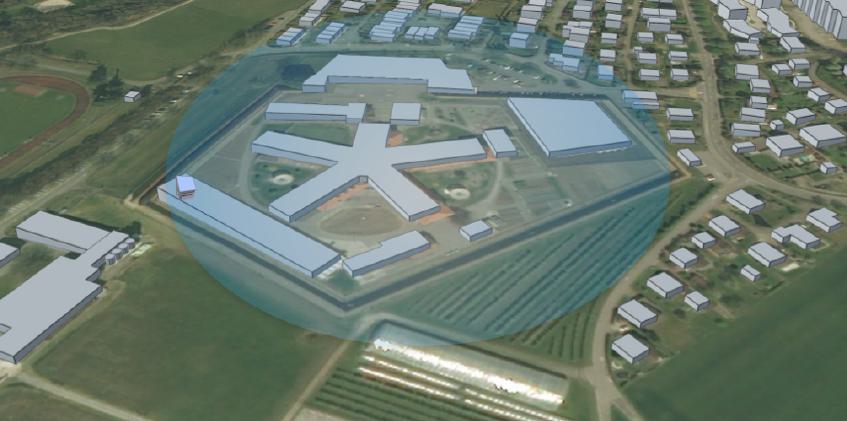
A single Y9860A sensor can cover a complete prison area and monitor it for suspicious wireless signal activity.
Easy graphical user interface
The Y9860A software is flexible and modular, and can be tailored to customer-specific needs. YOTASYS also develops customer-specific software and tools for fast prototyping and installation.
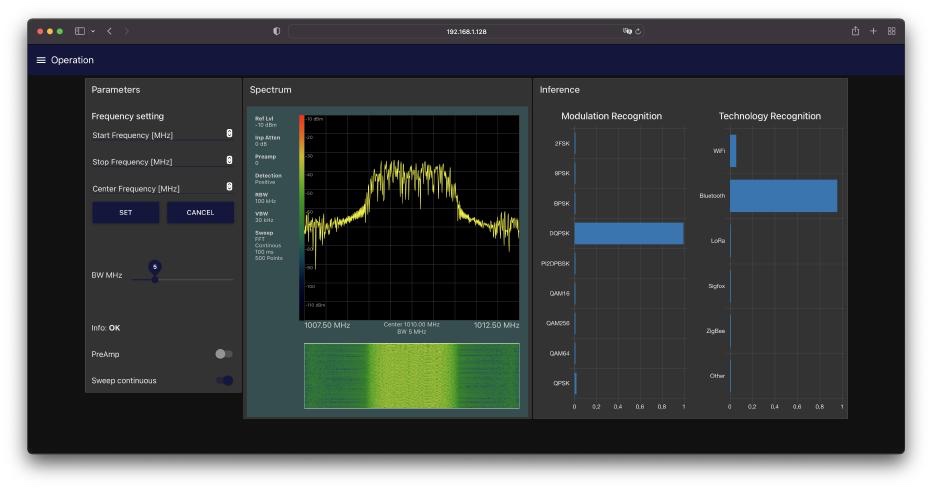
A web interface lets the end user operate and configure the Y9860A, with a comprehensive, application-specific dashboard of charts, buttons, status LEDs and map information.
The Y9860A integrates easily into existing prison monitoring solutions. Alarms can be tailored to specific interfaces such as HTTP, MQTT or SNMP.